
The short answer: the best time to visit Morocco, for a first trip that combines Marrakech, the desert and Fes, is from late March to mid-May or from October to mid-November. In those months, Marrakech averages daytime highs of about 74 to 85°F, and the desert gateway of Errachidia stays mostly in the 70s, according to official 1991–2020 climate normals. Summer belongs to the Atlantic coast and the mountains; winter suits the coast and travelers who pack for cold nights. The month is the first decision in our first-timer's checklist for planning a trip to Morocco, because it shapes the route.
How we put this together. Temperatures and rainfall come from the World Meteorological Organization's 1991–2020 normals for seven Moroccan weather stations, published by NOAA and read on October 27, 2026; we converted them to Fahrenheit. Holiday and festival dates come from published calendars and Moroccan press. Averages describe a typical year, not your week's forecast.
Key takeaways
- The best time to visit Morocco for a first trip combining Marrakech, the Sahara and Fes is late March to mid-May or October to mid-November, when Marrakech's average daily high runs from about 74 to 85°F.
- In July and August, Marrakech averages daytime highs near 100°F, and Errachidia, the weather station on the road to the Merzouga dunes, about 101 to 103°F, per 1991–2020 WMO normals.
- Morocco's Atlantic coast stays mild all year: Essaouira's average daily high ranges only from about 65°F in January to 73°F in September.
- Most of Morocco's rain falls from November to March, and mostly in the north and the mountains: Fes gets about 19 inches a year, Marrakech about 9.
- Ramadan 2027 is expected to start around February 8 and end with Eid al-Fitr around March 10, subject to Morocco's moon sighting.
Best time to visit Morocco: the four seasons compared
Morocco is not one climate: judge each season by the regions on your route.
| Season | Best for | Pros | Cons |
|---|---|---|---|
| Spring (Mar–May) | First trips, the desert, Fes | Marrakech highs of 74–85°F; desert days in the 70s in March and April | Marrakech's busiest season; Ramadan 2027 runs into early March |
| Summer (Jun–Aug) | The coast, Atlas hiking | Essaouira highs of about 71–72°F; mountain trails at their driest | Highs of 92–100°F in Marrakech and 96–103°F near the dunes |
| Fall (Sep–Nov) | First trips, from October | Marrakech highs of 83°F in October, 74°F in November | September still averages 91°F in Marrakech; rain returns to the north in November |
| Winter (Dec–Feb) | Agadir sun, quieter medinas | Agadir highs near 70°F; January is KAYAK's cheapest month to fly from the US, $734 on average (Nov 2026) | Desert nights around 36–40°F; snow can close the Tizi n'Tichka pass |
Average daytime high, Marrakech
Degrees Fahrenheit, by month, 1991–2020
Shaded band = comfortable for a full day on foot (65–85°F)
- J
- F
- M
- A
- M
- J
- J
- A
- S
- O
- N
- D
See the data as a table
| Month | Average daytime high, Marrakech (°F) |
|---|---|
| January | 66 |
| February | 69 |
| March | 74 |
| April | 78 |
| May | 85 |
| June | 92 |
| July | 100 |
| August | 99 |
| September | 91 |
| October | 83 |
| November | 74 |
| December | 68 |
Morocco's weather, region by region
Each region below uses the nearest weather station with official 1991–2020 normals. Averages hide hot and cold spells, but they show the pattern.
| Region (weather station) | January high / low | April high | July high | October high | Rain per year |
|---|---|---|---|---|---|
| Marrakech | 66 / 43°F | 78°F | 100°F | 83°F | 8.7 in |
| Sahara gateway (Errachidia, 3,400 ft) | 61 / 36°F | 79°F | 103°F | 80°F | 5.2 in |
| Middle Atlas (Ifrane, 5,460 ft) | 49 / 30°F | 60°F | 87°F | 67°F | 37.9 in |
| Essaouira | 65 / 52°F | 67°F | 71°F | 72°F | 11.8 in |
| Agadir | 70 / 47°F | 74°F | 80°F | 79°F | 9.1 in |
| Fes | 61 / 39°F | 72°F | 95°F | 79°F | 19.2 in |
| North (Tetouan, near Chefchaouen) | 63 / 49°F | 69°F | 86°F | 76°F | 25.8 in |
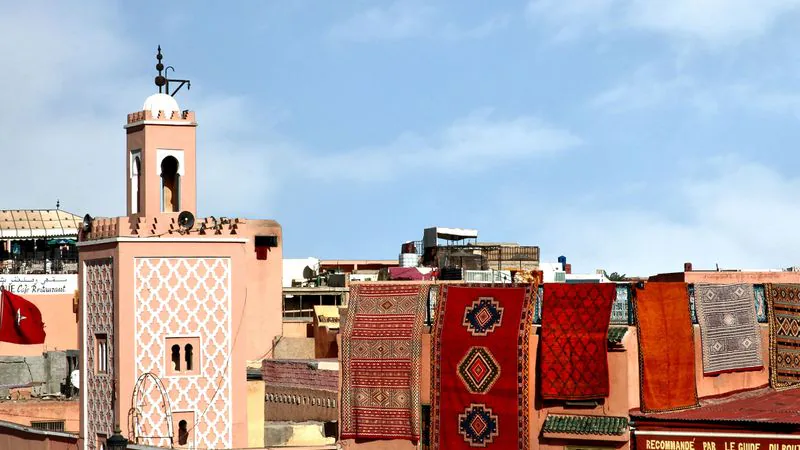
Marrakech
Go from March to May or in October and November. Highs climb from 74°F in March to 85°F in May, and fall back to 83°F in October. March is the wettest month, yet it still averages under five days with measurable rain.
In July and August, the average high sits near 100°F and nights stay around 70°F, so sightseeing shifts to the early morning and the evening. Winter days are pleasant at about 66°F in January, but nights drop to about 43°F: ask your riad whether rooms are heated.
March to May and September to October are Marrakech's high season, per Lonely Planet. On those dates, book your first nights before anything else.
Compare Marrakech riads for spring or fall dates →
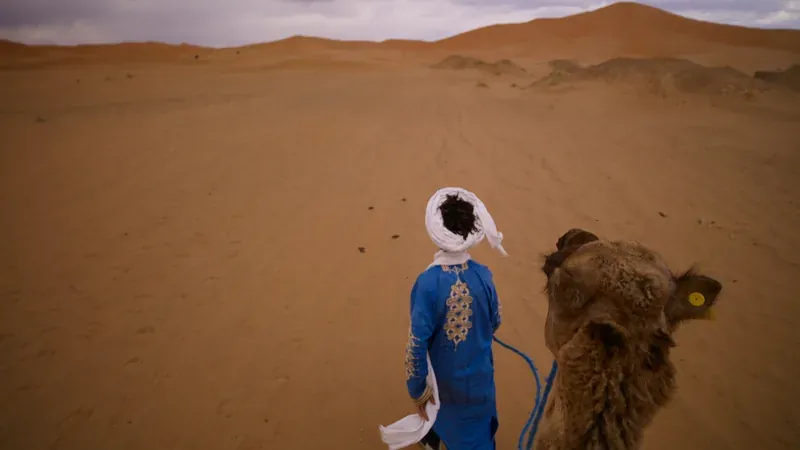
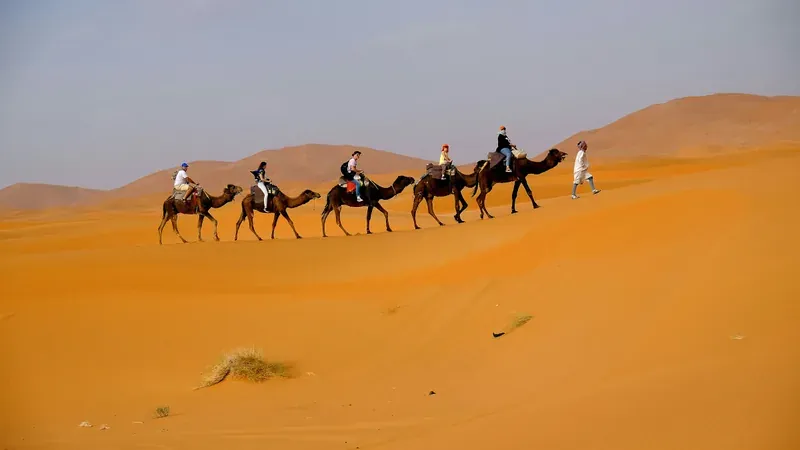
The Sahara desert
Errachidia, on the road to the Merzouga dunes, is the nearest station with official normals; conditions at the dunes can differ. The pattern is clear all the same: the comfortable windows are March–April and October–November, with highs of 69 to 80°F and nights of 46 to 58°F.
July averages 103°F by day and 78°F at night. In January, the high is about 61°F but the low drops to about 36°F, which is the night you spend in a desert camp: check that yours has heating or extra blankets.
If the desert is the reason for your trip, pick its window first and build the rest around it. Our guide to choosing a 2, 3 or 4-day Sahara desert tour from Marrakech explains which length fits your days.
Compare Sahara tours for your dates →
The Atlas Mountains
Ifrane, a Middle Atlas town at about 5,460 feet, gets nearly 38 inches of rain and snow a year, mostly from November to March, and its average January low is about 30°F. High Atlas villages and passes face the same kind of winter.
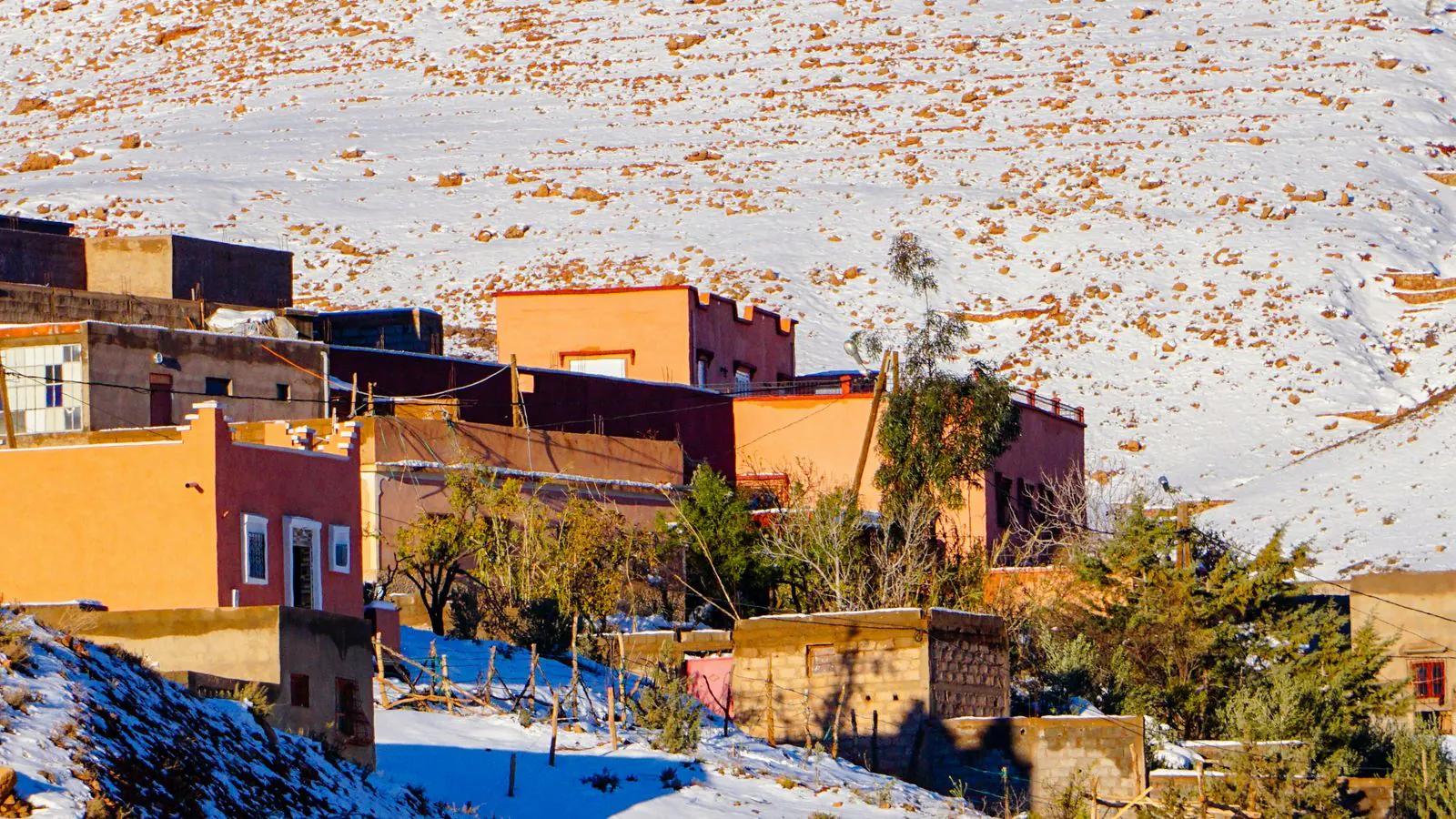
Winter can close the main Atlas road. On January 3, 2026, heavy snow blocked the Tizi n'Tichka pass between Marrakech and Ouarzazate, halting traffic in both directions, according to Hespress. In winter, check the road status with your driver or tour operator the day before you cross.
For walking, aim for June or September, when Ifrane's average high is about 76 to 77°F. Mid-summer is the mountains' strong season too, since July highs there stay near 87°F while Marrakech bakes.
The Atlantic coast: Essaouira and Agadir
The coast is Morocco's year-round option. Essaouira's average high moves only between about 65 and 73°F across the year, which makes it the summer escape from Marrakech; nights stay mild too, about 52°F in January.
Agadir is the winter sun pick, with average January highs near 70°F and about 21 days of measurable rain in a whole year. Summer on this coast is dry: Essaouira averages no measurable rain at all in July.
Fes and the north
Fes is the rainiest stop on a classic route: about 2.4 to 2.6 inches a month from November to January, spread over six or seven wet days. It is also hot in summer, with July and August highs near 95°F. April, May and October are its best months.
Chefchaouen sits higher in the Rif mountains than Tetouan, its nearest station with official normals, so expect it cooler. The region is the wettest you are likely to visit: Tetouan averages nearly 4 inches in December alone. Pack a rain jacket from November to March.
Crowds and prices through the year
The busiest months match the best weather: in Marrakech, March to May and September to October.
Summer brings a different crowd. Opération Marhaba, which welcomes Moroccans living abroad on their summer return, ran from June 10 to September 15 in 2026 and received more than 4.1 million people, according to Maroc.ma. Expect busy ports, roads and coastal towns.
The quietest stretches fall outside the high season: January and November, per Lonely Planet. They suit a city-and-coast trip better than a desert one.
Ramadan, Eid and festivals in 2027
Religious holidays follow the lunar calendar and move about 11 days earlier each year, so check the dates for your own year.
- Ramadan 2027
- Expected around February 8, with Eid al-Fitr around March 10 (estimates; Morocco's moon sighting sets the dates)
- Eid al-Adha 2027
- Listed for May 16–17 (Office Holidays; timeanddate shows May 17 as tentative), subject to the moon sighting
- Festivals 2027
- No 2027 dates announced as of October 2026; the 2026 dates below are a guide to the season only
Ramadan does not close Morocco to visitors, but it changes daytime meals and opening hours. What closes, what keeps running and how to plan your days is in our guide to Ramadan in Morocco for tourists. For a clean spring window in 2027, aim for after Eid al-Fitr: late March to mid-May. Around Eid al-Adha, book trains and buses a few days ahead.
| Festival | City | 2026 dates | Worth timing a trip for if… |
|---|---|---|---|
| Fes Festival of World Sacred Music | Fes | June 4–7 | You want evening concerts in historic venues |
| Gnaoua and World Music Festival | Essaouira | June 25–27 | You like music and do not mind a full town |
| National Festival of Popular Arts | Marrakech | July 2–6 | You can take Marrakech's July heat |
| Marrakech International Film Festival | Marrakech | November 20–28 | You travel in late fall anyway |
When to go to Morocco, by traveler
| Your situation | Best time | Why |
|---|---|---|
| First trip: Marrakech, desert and Fes | Late March to mid-May, or October to mid-November | Mild in all three regions; in 2027, start after Eid al-Fitr |
| The desert night is the highlight | March–April or October–November | Errachidia highs of 69–80°F, nights not yet cold |
| Beach and sun | Agadir in winter; Essaouira any month | Agadir highs near 70°F in January; Essaouira 65–73°F all year |
| Hiking in the Atlas | June or September | Warm days, far less rain than in winter |
| Family summer vacation | Coast first, Marrakech in the mornings | 100°F afternoons inland in July and August |
| Fewer visitors, cities and coast | January, or November | Outside the high season; cold desert nights |
| Music festivals | June | Fes and Essaouira festivals ran in June 2026 |
Before you fix your dates
Before you choose your month
0 / 7 doneFAQ
What is the best month to visit Morocco?
April for most first trips: Marrakech averages 78°F, Fes 72°F and the desert gateway of Errachidia 79°F, per 1991–2020 normals, and in 2027 it falls after Ramadan. October is the fall equivalent.
What is the worst time to visit Morocco?
For a route through Marrakech and the Sahara, July and August: average highs reach about 100°F in Marrakech and 103°F at Errachidia. Those months still suit the coast and the mountains.
Is Morocco cold in winter?
Nights are. Marrakech averages 66°F by day in January but about 43°F at night, and the desert gateway about 36°F. The Atlas gets freezing nights and snow; Agadir stays near 70°F by day.
When is the rainy season in Morocco?
Roughly November to March, mostly in the north and the mountains. Fes averages 2.4 to 2.6 inches a month from November to January; Marrakech averages fewer than five wet days in every month.
When is the best time to visit the Sahara in Morocco?
March–April or October–November. At Errachidia, the nearest station with official normals on the road to the Merzouga dunes, highs run from 69 to 80°F and nights from 46 to 58°F in those months, per 1991–2020 WMO normals. July averages 103°F by day; January nights drop to about 36°F.