
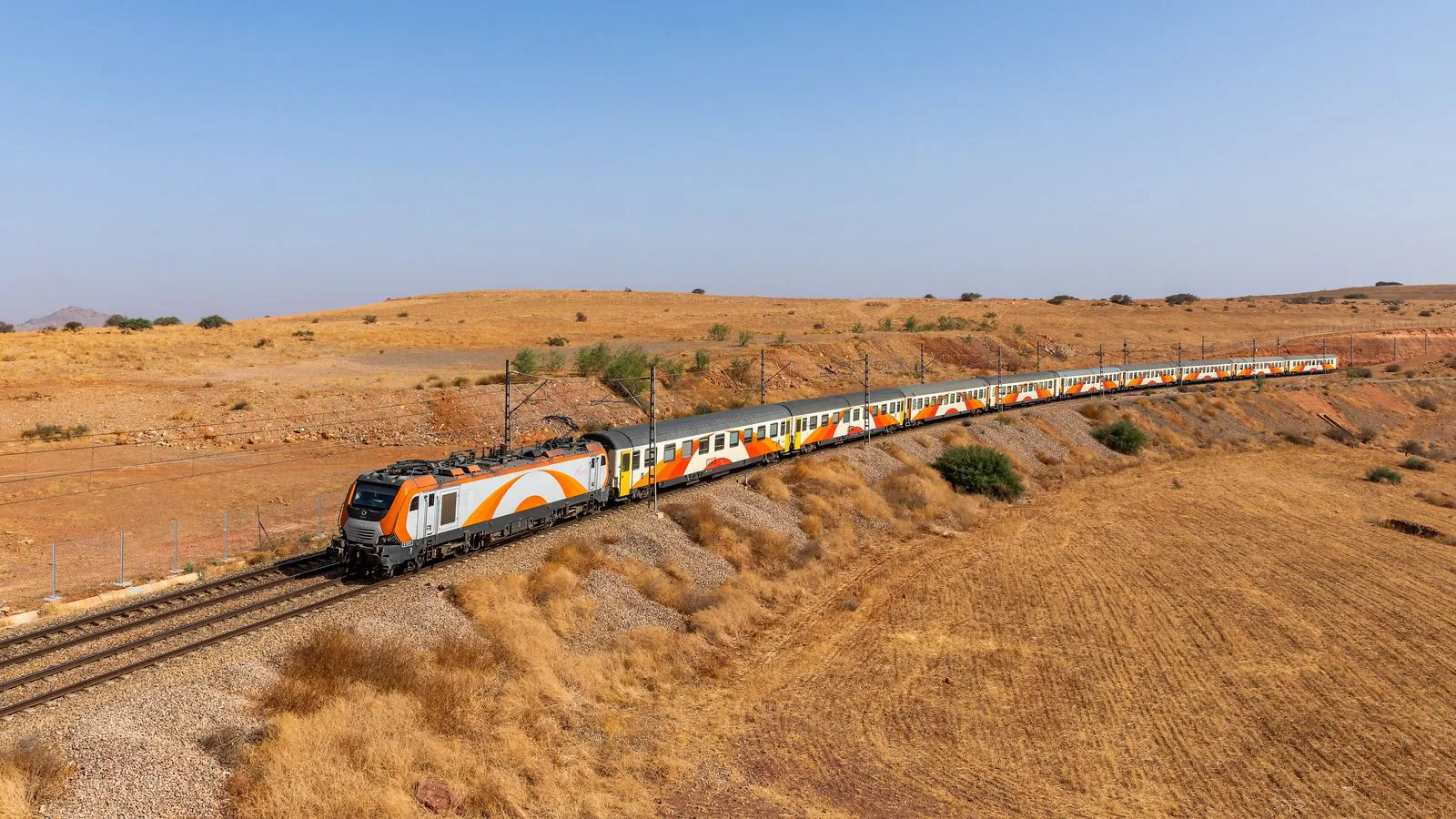
The short answer: take the direct ONCF train. Published network tables list it at about seven hours from Marrakech to Fes with no change, several times a day, and every ticket comes with a reserved seat; confirm your train's times on the current ONCF timetable. Book on the ONCF website or app a day or two ahead, pick a morning departure so you reach the Fes medina in daylight, and plan a petit taxi at each end: neither station is inside a medina.
How we put this together. The route, the type of train and the booking rules come from ONCF's own pages and timetable documents, cross-checked with the published network tables in October 2026. ONCF does not print a single fixed fare for this route, and departure times change with each new timetable, so we tell you where to read them rather than copy numbers that may already be out of date.
The Marrakech to Fes leg is one of the decisions covered in our guide to getting around Morocco by train, bus, taxi or car. This page goes deeper on that one train.
Key takeaways
- Published network tables list the train from Marrakech to Fes as a direct ONCF service of about seven hours, with no change of train, as of October 2026.
- About eight direct trains a day run between Marrakech and Fes on ONCF's Al Atlas intercity network, according to published network tables in October 2026; the official ONCF timetable has the final word.
- Seat reservation is mandatory in both first and second class on Al Atlas trains, so every ticket is for a specific train, car and seat.
- There is no high-speed train between Marrakech and Fes; the Kenitra–Marrakech high-speed line is expected around 2029.
- Marrakech and Fes stations both sit in the new town, outside the medina, so travelers need a petit taxi or a riad pickup at each end.
Train, bus, flight or desert tour?
The train wins for most first-timers. A bus covers the same ground, a flight saves time only on paper, and a desert tour is a different trip that happens to finish in Fes.
| Option | Best for | Pros | Cons |
|---|---|---|---|
| Direct ONCF train | Most travelers | Reserved seat, no change, room to stretch your legs | Long day; stations outside the medinas |
| Long-distance bus | Travelers who missed the train | Several companies run the route | Journey time and fare vary by company: check ctm.ma |
| Domestic flight | Very short trips | Short time in the air | Airport time eats the gain; check whether a direct flight runs on your date |
| 3-day Sahara tour ending in Fes | Travelers who want the desert anyway | Turns the transfer into the trip | Three days in a van instead of one on a train |
If the Sahara is on your list, the third option deserves a look: our guide to Sahara desert tours from Marrakech compares tours that end in Fes.
The Marrakech to Fes train timetable
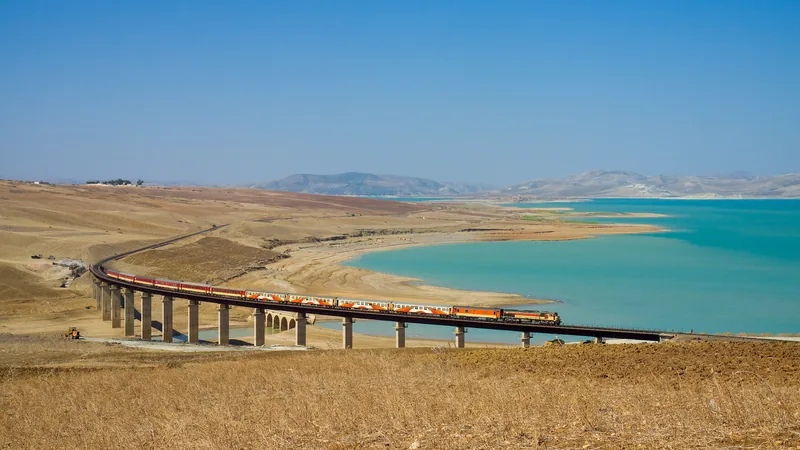
ONCF runs this route as a direct Al Atlas intercity train: you board in Marrakech and stay in your seat to Fes. Network tables list about eight trains a day in each direction and a journey of about 7 hours 10 minutes, as of October 2026. The train runs north through Casablanca and Rabat, then turns inland through Meknes. Intermediate stops vary from one train to another, so check yours on the grid.
ONCF publishes the timetable as a PDF grid on oncf-voyages.ma, renewed with each timetable change; the latest one we found is dated 15 September 2025, but we could not open it, so check the validity date on the grid you download. That grid, not the network tables, has the final word on departure times and journey length.
Which departure to pick:
- Before 9 am if you can: you reach Fes in the afternoon, with light left to find your riad.
- Midday works if your riad will meet you at a medina gate after dark.
- Late afternoon trains reach Fes late at night: avoid them on a first trip unless a driver is waiting.
Check the timetable twice. Once when you plan, and again the week you travel: ONCF changes its grids, and works on the line can shift departures.
Is there a fast or overnight train?
No high-speed train runs between Marrakech and Fes. Al Boraq, ONCF's high-speed train, serves only the Tangier–Kenitra–Rabat–Casablanca corridor; a Kenitra–Marrakech high-speed line is under construction, with service expected around September 2029, according to Morocco's transport minister. If you were counting on a night train, check the current ONCF timetable for night services before you plan around one. On a first trip, a daytime train is the better choice anyway: you arrive in daylight.
First or second class?
On Al Atlas trains, both classes come with a reserved seat: ONCF makes the reservation mandatory in first and second class, and your ticket names the train, the car and the seat. The real difference is space.
| Second class | First class | |
|---|---|---|
| Seat | Reserved | Reserved |
| Space | Standard | More room per passenger |
| Fare | Lower | Higher — compare on ONCF |
| Best for | Budget travelers, short legs | Seven hours with luggage, couples, light sleepers |
Our take: on a seven-hour ride, first class is worth paying for if the gap with second class is modest on your date. Look at both fares side by side in the ONCF search results before you choose: the difference varies by train.
How to book ONCF tickets as a visitor
You can book from the US before you fly. ONCF sells tickets on its official site, oncf-voyages.ma, and in its ONCF Voyages app.
- Search Marrakech to Fes on oncf-voyages.ma or in the app, on your travel date.
- Pick the train: check the departure, the arrival time in Fes and that it shows as direct.
- Pick the class, then enter each passenger's name exactly as it appears on the passport.
- Pay by card. ONCF's online payments run through CMI, the Moroccan card payment platform. Tell your US bank you are buying abroad: an international online payment can be declined by default.
- Save the e-ticket to your phone and take a screenshot, in case you have no signal at the platform.
If your card is refused online, buy at the ticket counter in Marrakech station the day before. In busy periods, around religious holidays and in summer, do not leave it to the morning you travel.
Unofficial booking sites. Several sites with "ONCF" or "Morocco train" in their name resell tickets, often with a service fee. Check the address bar: the official sales site is oncf-voyages.ma.
A phone that works when you land makes the whole day easier: the e-ticket, the timetable, your riad's location pin and a message to say you are on your way.
On the day: leaving from Marrakech
Marrakech station is in the new town, outside the medina walls. From a medina riad, take a petit taxi: ask your riad to call one, or walk to the nearest gate where taxis wait. Agree the fare or ask for the meter before you set off.
- Arrive early. Give yourself time to find your car on the platform; the car number is on your ticket.
- Bring food and water. Do not count on a meal on board: seven hours is long, so carry your own.
- Travel light enough to lift your own bags, and keep a small bag with water and chargers at your seat.
Arriving in Fes: from the station to the medina
Fes station is in the Ville Nouvelle, the 20th-century town, away from the old medina, Fes el-Bali. Cars cannot enter most of Fes el-Bali, so the taxi stops at a gate and you walk the last part.
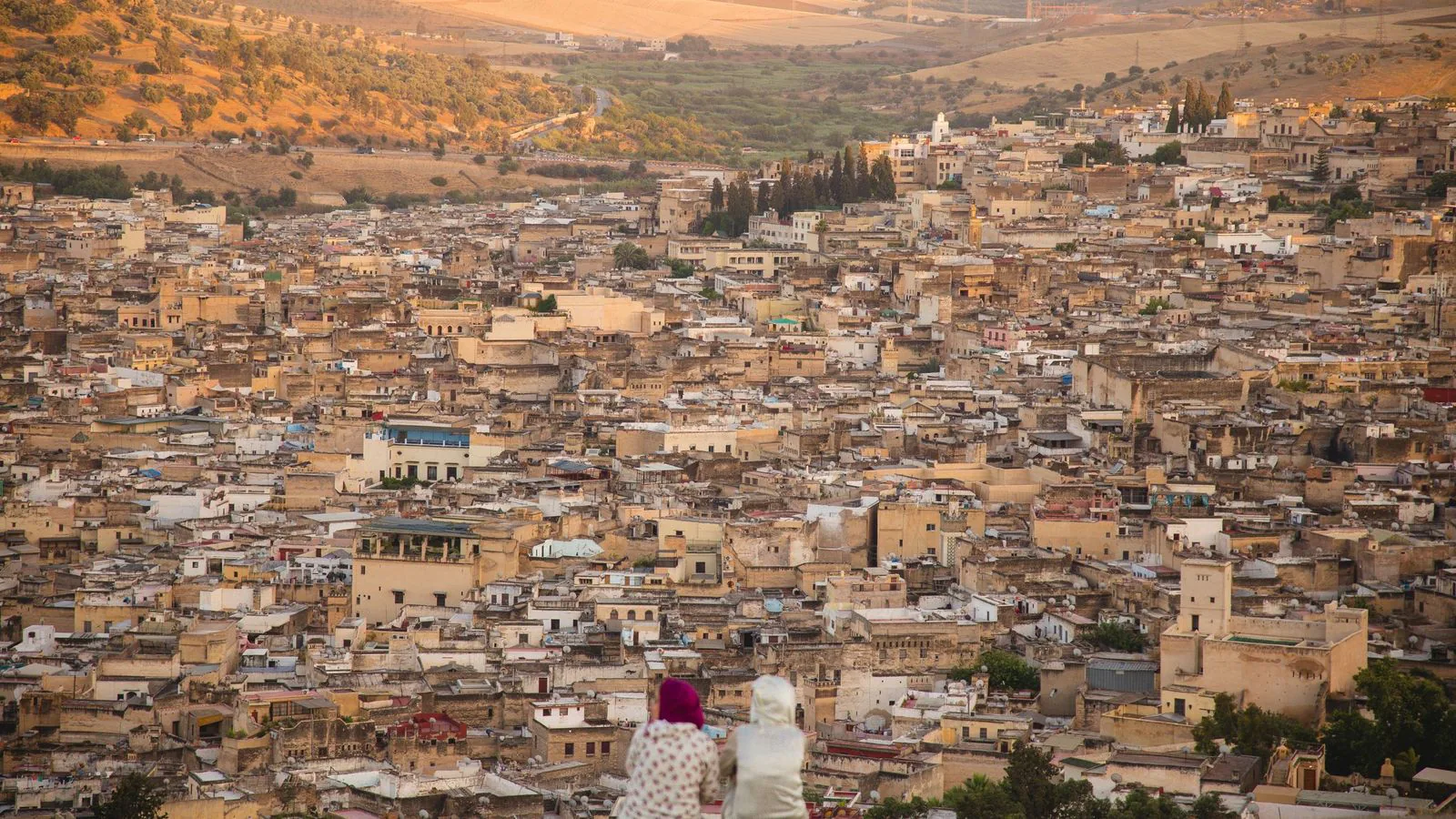
- Before you leave Marrakech, message your riad with your arrival time and ask which gate to use.
- At Fes station, take a petit taxi to that gate. Ask for the meter or agree the fare before the door closes.
- At the gate, someone from the riad meets you or you follow their directions. Many riads send a porter with a cart for luggage, sometimes for a fee: ask when you book.
Ask for the pickup in writing. A short message from the riad naming the gate and the person who meets you saves a lot of searching in Fes el-Bali, the medina where map apps struggle most.
What the trip costs
ONCF does not publish one fixed fare for this route: it depends on the class, the train and the date. Check the price in the ONCF search results when you book.
Marrakech to Fes by train, per person
Checked October 2026Best option by situation
| Situation | Best option | Alternative |
|---|---|---|
| First trip, Marrakech then Fes | Morning direct train, first class | Second class to save money |
| Tight budget | Second-class train | Bus: compare the fare on ctm.ma |
| You also want the Sahara | 3-day desert tour ending in Fes | Train, then a tour from Fes |
| Family with lots of luggage | First-class train + riad pickup in Fes | Private driver for the whole day |
| Only one week in Morocco | Train, to keep a full day elsewhere | Domestic flight, if a direct one runs on your date |
On a one-week trip, this train is the backbone of the classic Marrakech, Sahara and Fes loop: see how it fits in our 7 Days in Morocco itinerary.
Flying into Marrakech the day before? A pre-booked ride from the airport gets you to your riad without searching for a taxi after a long flight.
Book a Marrakech airport transfer →
Before you travel
Before you take the Marrakech to Fes train
0 / 7 doneFAQ
Is there a direct train from Marrakech to Fes?
Yes. Published network tables list direct Al Atlas trains between Marrakech and Fes, about eight a day in each direction, with no change of train, as of October 2026. Check the current ONCF timetable for your date.
How long is the train from Marrakech to Fes?
About seven hours, as of October 2026. Check the exact time of your train on the ONCF timetable: it varies slightly from one departure to another.
Can I buy train tickets at the station?
Yes, at the ticket counter. In busy periods, buy at least a day ahead: every seat is reserved, so a full train cannot take more passengers.
Is there an overnight train from Marrakech to Fes?
Check the current ONCF timetable for night services on your date before you plan around one. On a first trip, a morning train is the better choice anyway: you arrive in daylight.
Is there a fast train from Marrakech to Fes?
Not yet. The Al Boraq high-speed train only runs between Tangier and Casablanca; a high-speed line to Marrakech is expected around 2029.
Do I need to print my ONCF ticket?
We could not confirm ONCF's own rule on tickets shown on a phone, so print a copy as a backup. Keep a screenshot too, in case the phone has no signal.