
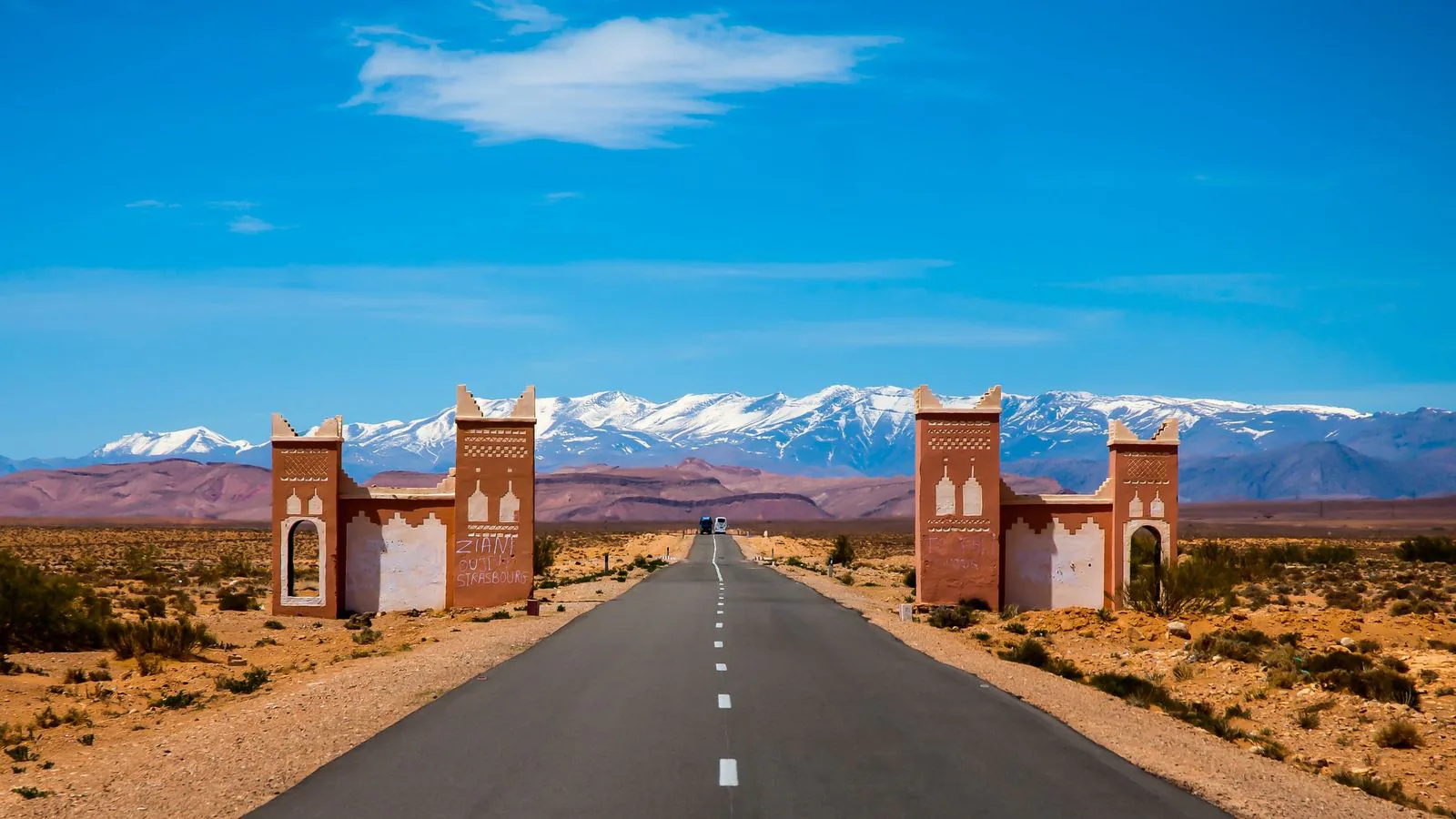
The short answer: renting a car in Morocco only pays off for the part of your trip that happens outside the cities: the Atlas Mountains, the southern valleys, the coast between towns. For Marrakech, Fes and Chefchaouen, skip it: medina lanes are closed to cars and the train does the job. To pick up the car you need your US driver's license, your passport and a credit card for the deposit; many rental companies also ask for an International Driving Permit, so get one before you fly.
How we put this together. The rules on licenses, speed limits, roundabouts and tolls come from Moroccan authorities (the consular services, NARSA road-safety agency, ADM motorways) and from AAA, checked in September and October 2026. Deposits, age limits and what the insurance covers are set by each rental company, so we tell you what to ask rather than quote one company's terms as if they applied to all.
This page goes deeper on one of the options in our guide to getting around Morocco by train, bus, taxi or car: who should rent, and how to do it without surprises.
Key takeaways
- A valid US driver's license allows a visitor to drive in Morocco for up to one year from entry, according to Morocco's consular services.
- Many rental companies in Morocco ask for an International Driving Permit alongside a US license as their own policy, even where the law does not require one.
- Rental companies in Morocco usually block a deposit on a credit card in the main driver's name, so a debit card alone can be refused at pickup.
- A rental car pays off in Morocco for the Atlas Mountains, the southern valleys and rural road trips, not for a stay in Marrakech, Fes or Chefchaouen.
- Photographing the car, the fuel gauge and the spare tire at pickup is the simplest protection against a dispute over the deposit when the car is returned.
Should you rent a car in Morocco?
The question is not "can I drive here" but "what does a car give me on this stretch that a train, a bus or a driver does not".
| Option | Best for | Pros | Cons |
|---|---|---|---|
| Rental car | Atlas valleys, the south, rural road trips | Stop where you want, reach villages without buses | Long drives, mountain bends, city parking |
| Train + bus | Marrakech, Casablanca, Rabat, Fes, Chefchaouen | No driving, no parking, reserved seats | Network stops where the rails and bus routes do |
| Private driver | Mountain days, families | Someone else handles the bends and the parking | Costs more than a rental on long trips |
| Organized tour | The Sahara on a first trip | Drive, camp and meals handled | Fixed schedule, shared group |
Rent if your plan includes several days between the High Atlas, the Dades and Draa valleys or the coast south of Essaouira, where public transport is sparse and the stops you want are not on any bus timetable.
Skip it if your trip is Marrakech, Fes and Chefchaouen. You would pay for a car that sits in a guarded lot while you walk the medinas, and spend a day driving what the train covers with your feet up.
For the Sahara, a self-drive to Merzouga is possible, but most first-timers are better served by a tour that handles the long road and the camp.
Documents you need at pickup
The law and the rental desk do not ask for the same things. Morocco's rules let you drive on your US license; the rental company's contract may ask for more.
- US driver's license
- Valid for driving in Morocco for up to one year from entry, according to Morocco's consular services, as of September 2026
- International Driving Permit
- Morocco is on AAA's list of countries that honor the US-issued IDP; many rental companies ask for it as their own policy — check your booking terms, as of September 2026
- Where to get an IDP
- In the US, only AAA and AATA are authorized by the State Department to issue it, as of October 2026 — get it from one of these two, not from another seller
- Passport
- Asked at the rental desk as ID — check your booking terms
- Credit card
- Usually required in the main driver's name for the deposit — confirm whether a debit card is accepted before you book
- Minimum age
- Set by each rental company, usually with a minimum time holding your license — confirm both when you book
Get the IDP before you leave. It is issued in the US, not in Morocco, so you cannot fix a missing permit at the airport desk. Carry it together with your US license: the permit is a translation, not a license on its own.
How to choose a rental company
You will find both international brands and local agencies in Morocco's main cities, some with desks at the airport: check who serves your arrival airport when you compare. Neither is better by default: what matters is the contract.
Compare offers on a comparison site to see several companies side by side, then read the terms of the one you pick, not only the price. These are the lines that make the difference:
| What to check in the terms | Why it matters |
|---|---|
| Deposit amount and card type | The most common pickup problem: a debit card or a low card limit |
| Insurance excess (deductible) | What you pay if the car is damaged, before any cover applies |
| Mileage | Limited mileage adds up fast on a road trip south |
| Fuel policy | Full-to-full is the easiest to check |
| Additional driver | Must be named on the contract to drive |
| One-way fee | Picking up in Marrakech and returning in Fes can cost extra |
| Where you may drive | Some contracts restrict unpaved tracks or the ferry to Spain |
| Transmission | Manual or automatic: if you need an automatic, request it explicitly and get it confirmed in writing |
About the insurance: every rental carries a deductible, and the choice between the company's own reduction and an independent excess policy is a money decision we cover in car rental insurance in Morocco
Compare car rentals in Morocco →
At pickup: what to check before you drive off
Ten minutes at the desk saves arguments at the return. Do this with the agent standing next to you.
- Walk around the car and photograph every scratch and dent, wheels included. Make sure the agent marks each one on the check-out sheet.
- Photograph the fuel gauge and the odometer.
- Open the trunk: check that the spare tire, the jack and the wrench are there and the spare is inflated.
- Check the papers in the glovebox: ask the agent which documents must stay in the car and have them shown to you.
- Test the air conditioning, the lights and the wipers before you leave the lot.
- Save the company's assistance number in your phone, and ask what to do in case of a breakdown.
The deposit dispute. Keep your pickup photos until the deposit is released on your card, which can take several days after the return. A photo with a date is the only argument that settles a "this scratch was not there" discussion.
Timing tip: pick the car up the day you leave the city, not the day you land. If you spend your first nights in a Marrakech medina riad, a car is only a parking bill, and an airport transfer gets you to the door of your riad.
Book a Marrakech airport transfer →
Driving in Morocco: what's different
Traffic drives on the right, as in the US. The rules that surprise American drivers most are the roundabouts and the checkpoints.
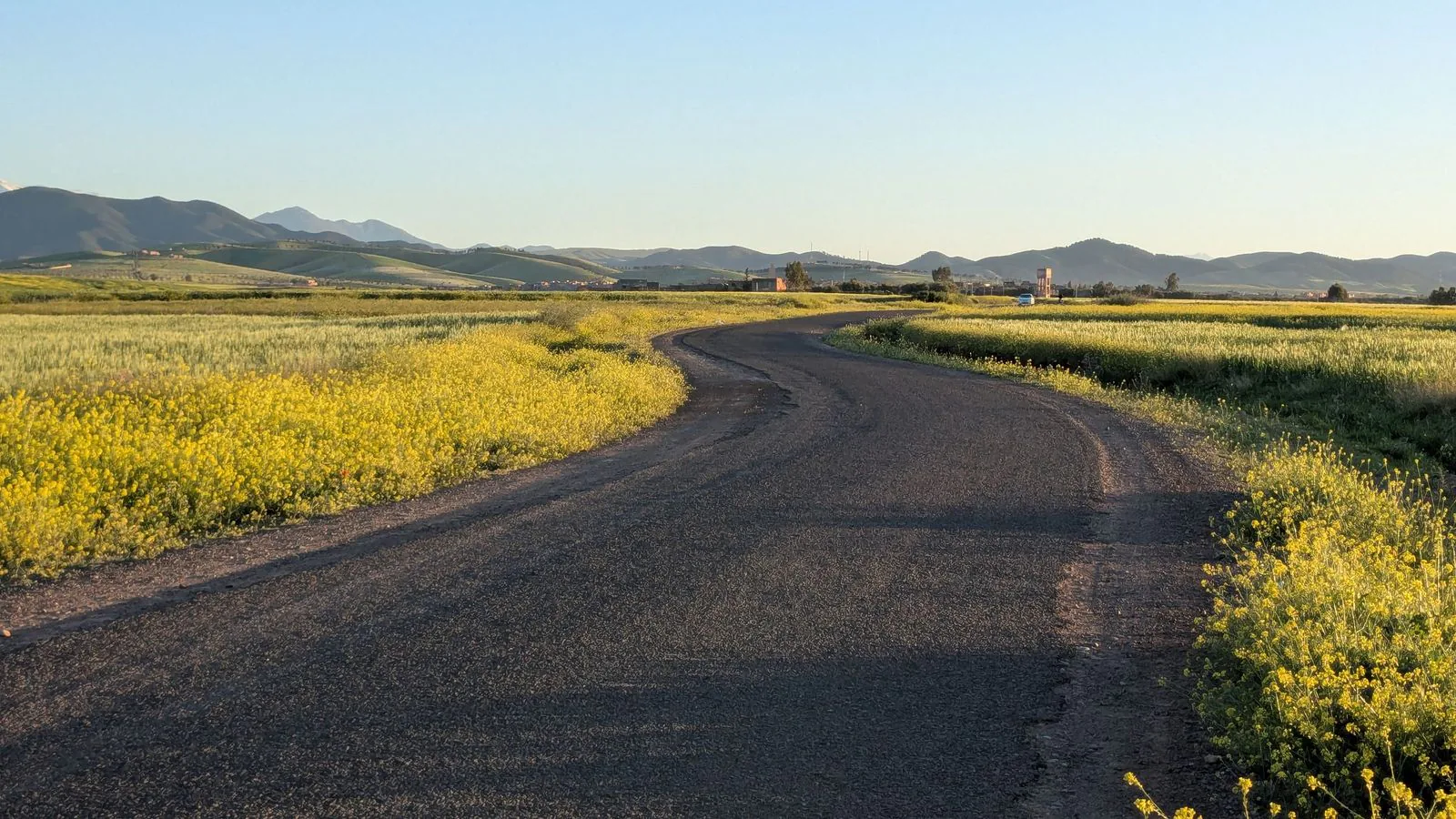
- Roundabouts. On a signed traffic circle, cars already on the ring have priority; on a plain roundabout, priority goes to traffic entering from the right, according to NARSA, as of September 2026.
- Speed limits. 20–60 km/h in town depending on the area, 80 km/h on national roads (100 km/h on some sections), 120 km/h on toll motorways, as of September 2026. Road signs are in km/h, not mph.
- Police checkpoints are frequent on main roads, often at town entrances: slow down, stop if signaled and have your license, IDP and rental papers ready.
- Tolls. ADM motorways accept dirhams in cash, bank cards at most booths, or the prepaid Jawaz badge, as of September 2026. Keep some cash in case a card reader does not work.
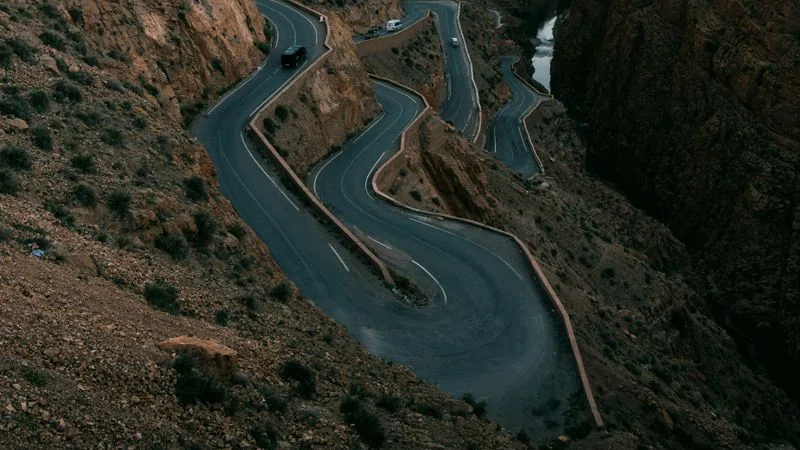
- Mountain roads such as the Tizi n'Tichka pass are slow: allow more time than your map app says, and drive them in daylight.
- Parking. Street attendants watch parked cars for a small tip; near the medinas, use a guarded lot.
Where driving yourself makes sense
| Trip | Best option | Why |
|---|---|---|
| Marrakech → Fes | Train | Direct, about seven hours per published network tables (confirm on ONCF), no driving: see how to book the train from Marrakech to Fes |
| Marrakech → Imlil and the High Atlas | Rental car or driver | Short distance, flexible stops |
| Marrakech → Aït Benhaddou → Dades Valley | Rental car | Several days of stops no bus covers |
| Marrakech → Merzouga (Sahara) | Tour | Long road, camp logistics handled |
| Marrakech → Essaouira | Bus or rental car | Bus for a short stay; car if you continue down the coast |
| Fes → Chefchaouen | Bus | Mountain road, small town best on foot |
What a rental costs
Rental rates move with the season, the car category and how far ahead you book, and the deposit is set by each company. Compare live quotes rather than trusting a figure printed months ago.
The costs to budget for
Checked October 2026Before you book
Before you rent a car in Morocco
0 / 8 doneFAQ
Can I rent a car in Morocco with a US license?
Yes. A valid US license lets you drive in Morocco for up to a year from entry, according to Morocco's consular services. The rental company may also ask for an International Driving Permit.
Do I need an International Driving Permit to rent a car in Morocco?
Not by Moroccan law for a short stay, but many rental companies ask for one in their terms. Get it in the US before you fly, so a strict desk cannot refuse your pickup.
Can I rent a car in Morocco without a credit card?
Policies vary by company, and many expect a credit card in the main driver's name for the deposit. If you only have a debit card, get written confirmation that it is accepted before you book, not at the desk.
Is it safe to rent a car and drive in Morocco?
Main roads and motorways are fine for a confident driver who respects the speed limits. Mountain roads, roundabouts and checkpoints take getting used to: drive in daylight and allow extra time.
Can I drive into the medina?
No. Most medina lanes are closed to cars. Park in a guarded lot near a gate and walk, or ask your riad where to leave the car.